Warning about the risks of sea foam
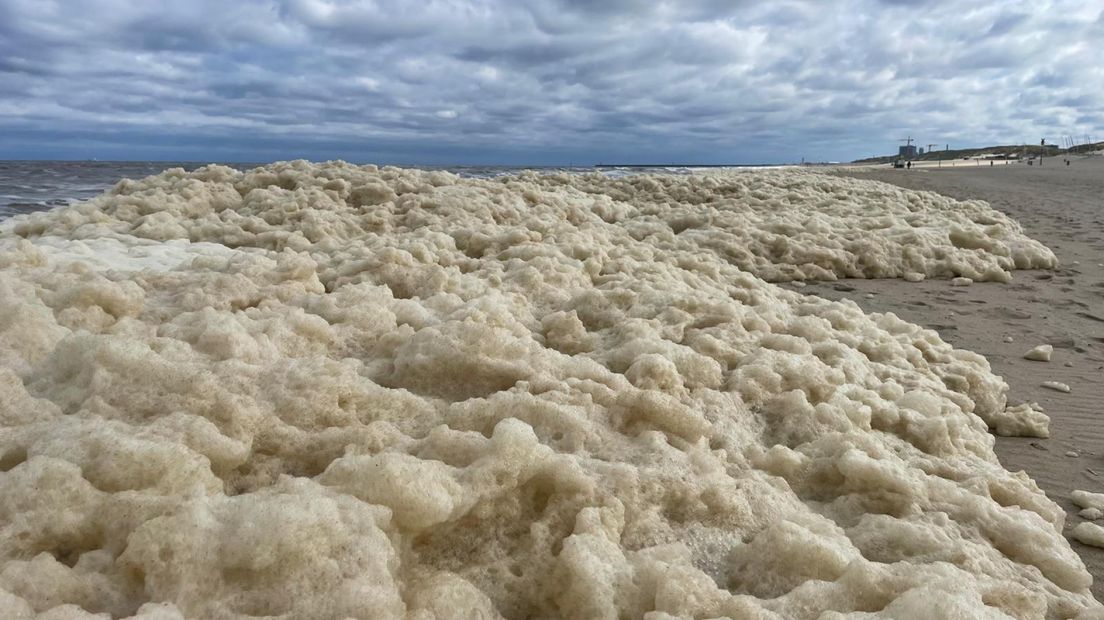
On 10 May 2026, the Foam Alert Service that was developed by the Institute of Natural Sciences in 2020 indicated a high risk of dangerous foam formation along the Belgian and Dutch coasts. Alerts were subsequently issued to municipalities and surf clubs, and no incidents occurred.
Most of us have seen sea foam washing up on our beaches — but few know what causes it, or the risks it can pose.
Each spring and early summer, microscopic algae such as Phaeocystis globosa can bloom explosively in the North Sea. When these algae die, proteins and gelatinous substances are released into the water. Wind and waves then whip this organic material into thick sea foam, much like beaten egg whites.
Usually, this creates the familiar foam streaks visible on the sea surface. But under certain conditions — high algal biomass, strong waves and onshore winds — the foam can accumulate massively on beaches.
This is not without danger. In spring 2020, extreme foam accumulation in Dutch coastal waters, reaching up to a metre thick in places, tragically caused the deaths of five surfers by asphyxiation.
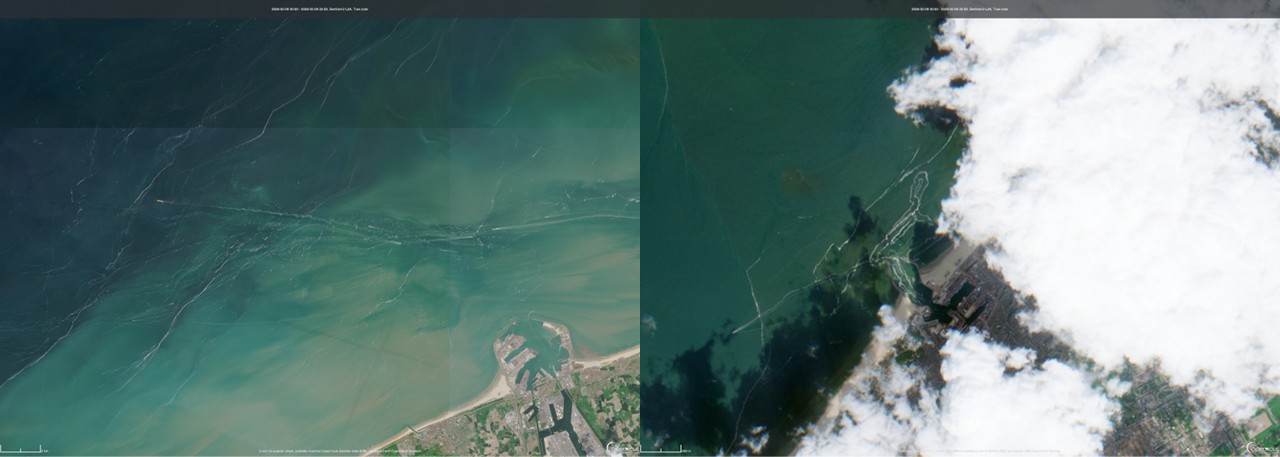
Since then, the Belgian Coast Guard, supported by the remote sensing, marine forecasting and aerial surveillance teams of the Institute of Natural Sciences, has been actively monitoring foam risks using satellite imagery, marine forecast models and aircraft observations. A dedicated Foam Alert Service was established to issue warnings when conditions become hazardous. The Dutch coast, where foam accumulation can be even more severe, is monitored as well.
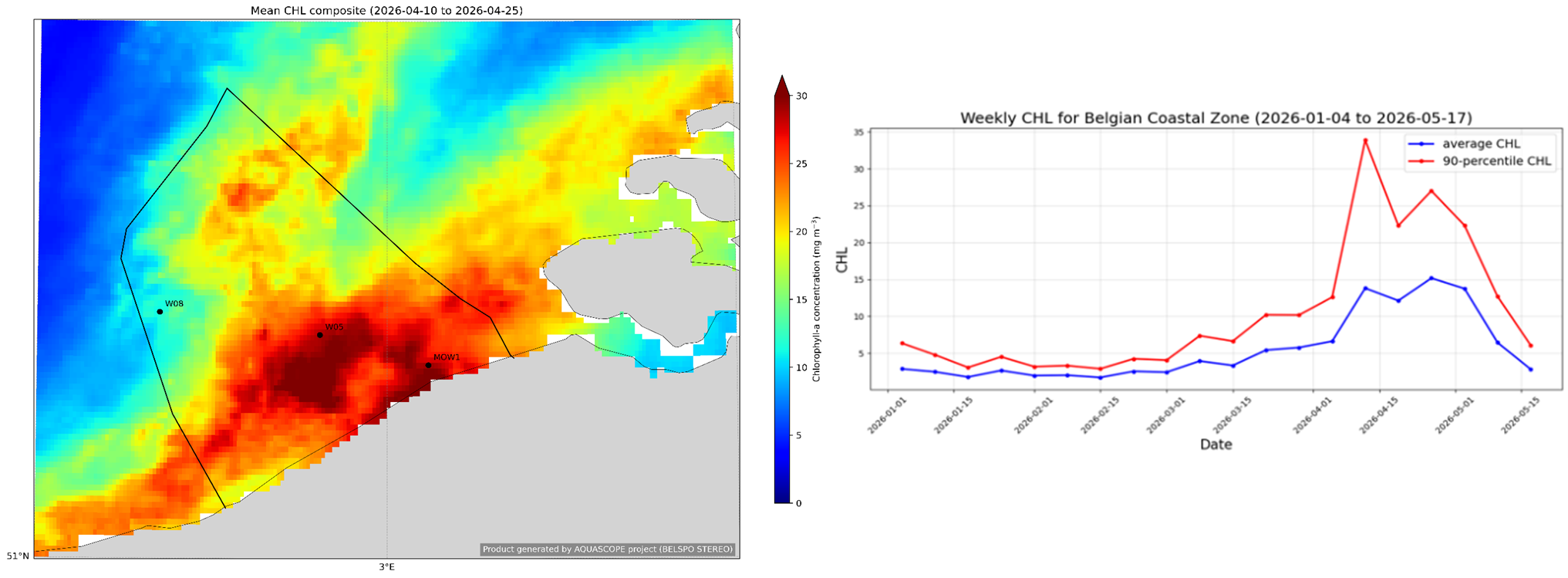
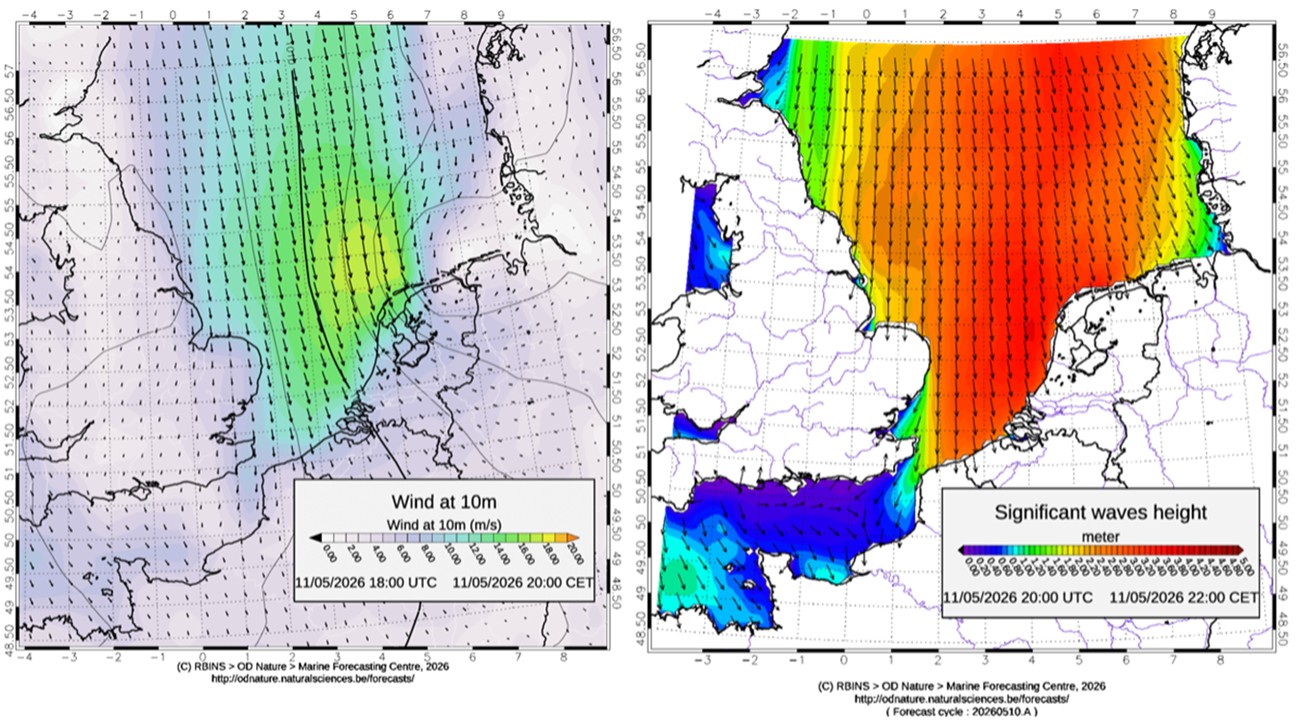
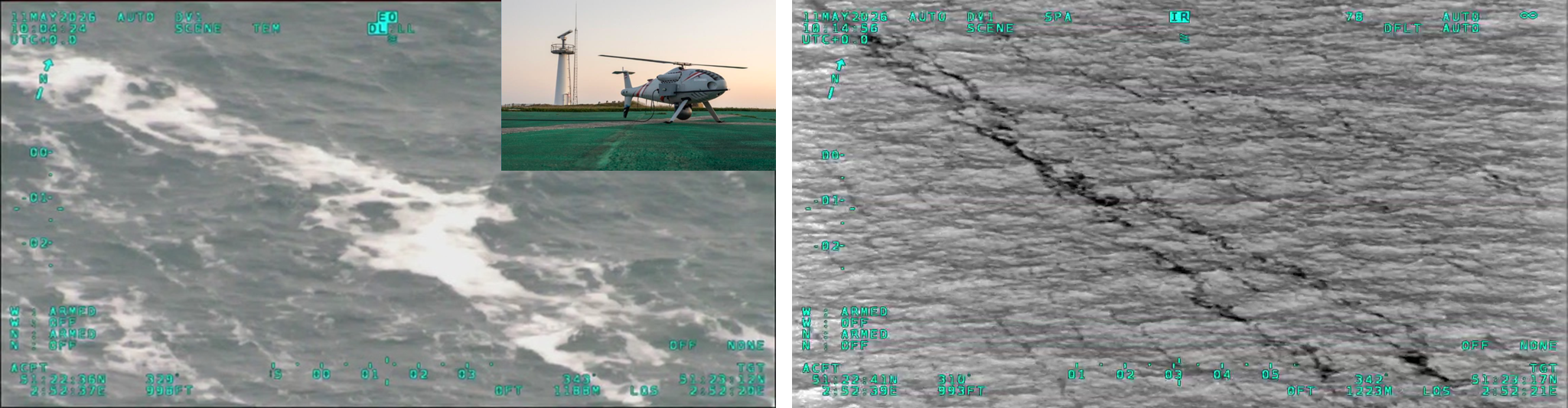
On 10 May 2026, satellite data from Aquascope (financed by Belspo), combined with wind and wave forecasts from the Marine Forecasting Centre, indicated a high risk of hazardous foam formation. In response, alerts were issued to municipalities and surf clubs along both the Belgian and Dutch coasts. Fortunately, no incidents were reported. In the following days, the situation was closely monitored by the Institute’s aerial surveillance team using Remotely Piloted Aircraft Systems (RPAS) deployed over Belgian coastal waters in the framework of the Multipurpose Maritime Operations (MMO) coordinated by the European Maritime Safety Agency (EMSA).
While sea foam is largely a natural phenomenon, human activities can intensify it. Nutrient enrichment (“eutrophication” or “over-fertilisation”) of coastal waters — often linked to agricultural fertilizer runoff entering the sea through rivers and groundwater — stimulates algal growth and can therefore increase foam formation. Research has also shown that hazardous substances such as PFAS can accumulate in sea foam at elevated concentrations. Forewarned is forearmed.
DETAIL – A sea foam alert is generated as follows: