Palaeontologists redraw the evolutionary tree of horses
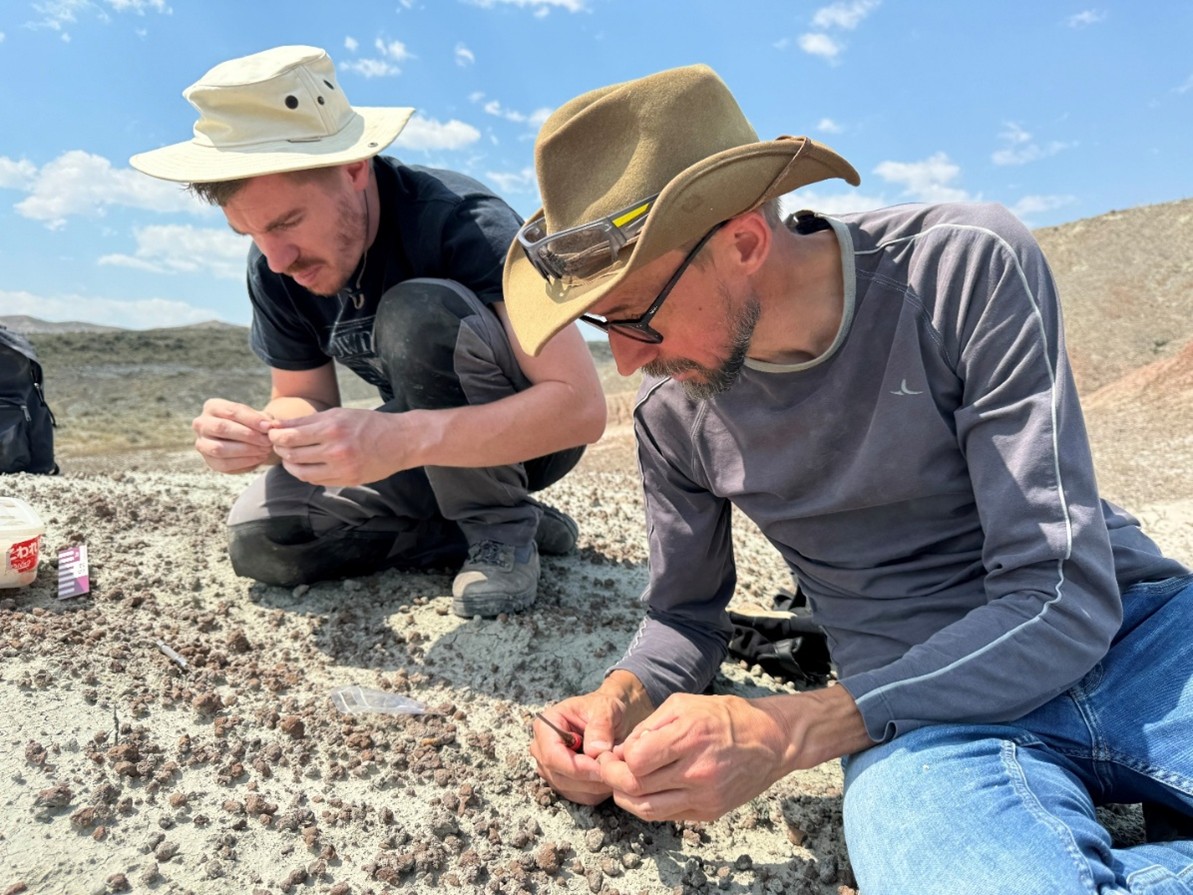
Palaeontologists from the Institute of Natural Sciences have redrawn the evolutionary tree of horses and their close relatives. Based on an in-depth comparative study, they conclude that the first horses appeared at least 5 million years later than previously thought, approximately 50 million years ago.
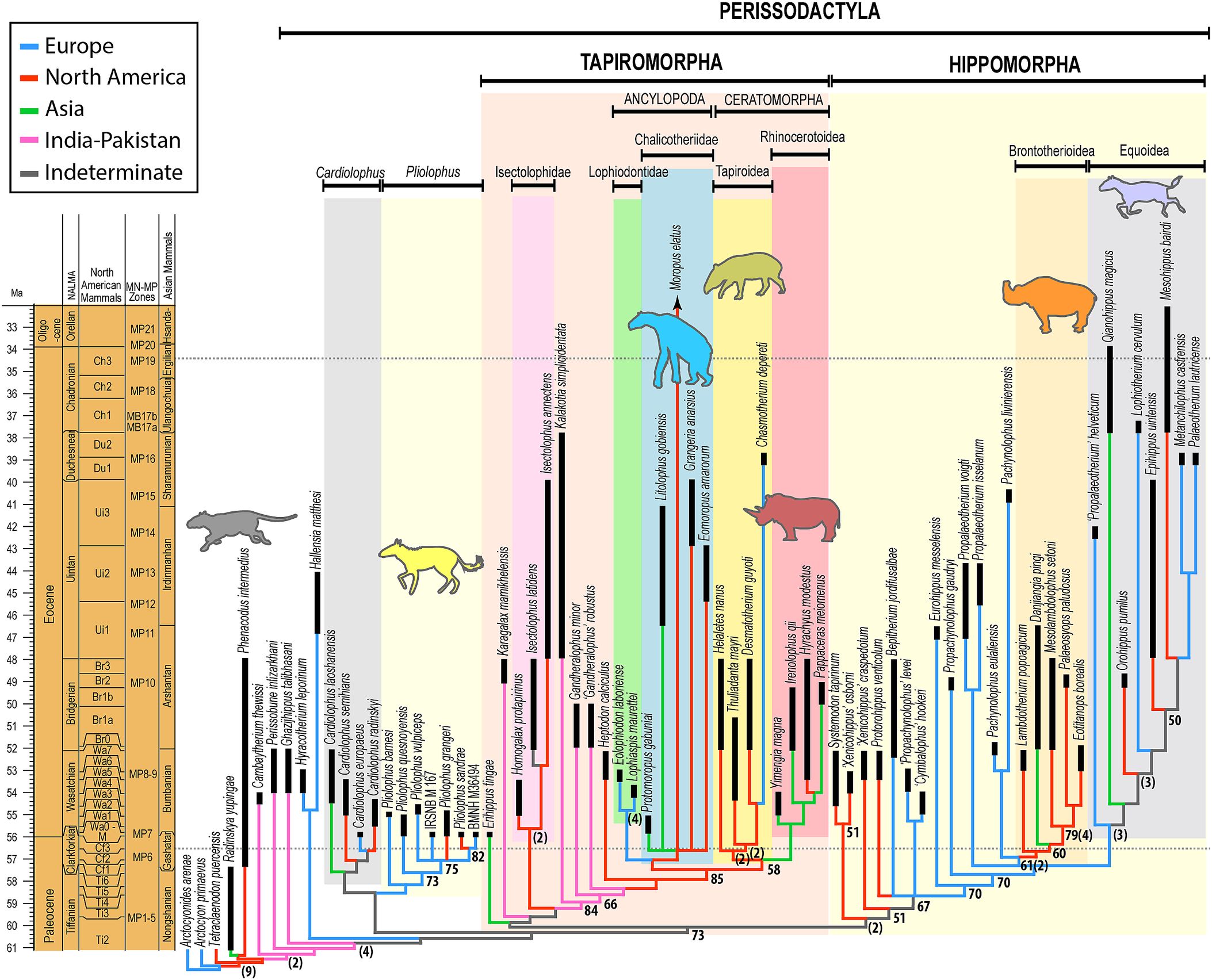
For more than a century and a half, palaeontologists have been adding new pieces to the puzzle of perissodactyl evolution, the group comprising horses, rhinoceroses, and tapirs. A complex puzzle, because while only six genera of perissodactyls remain today, fossils indicate that there have been more than 300 over the past 56 million years.
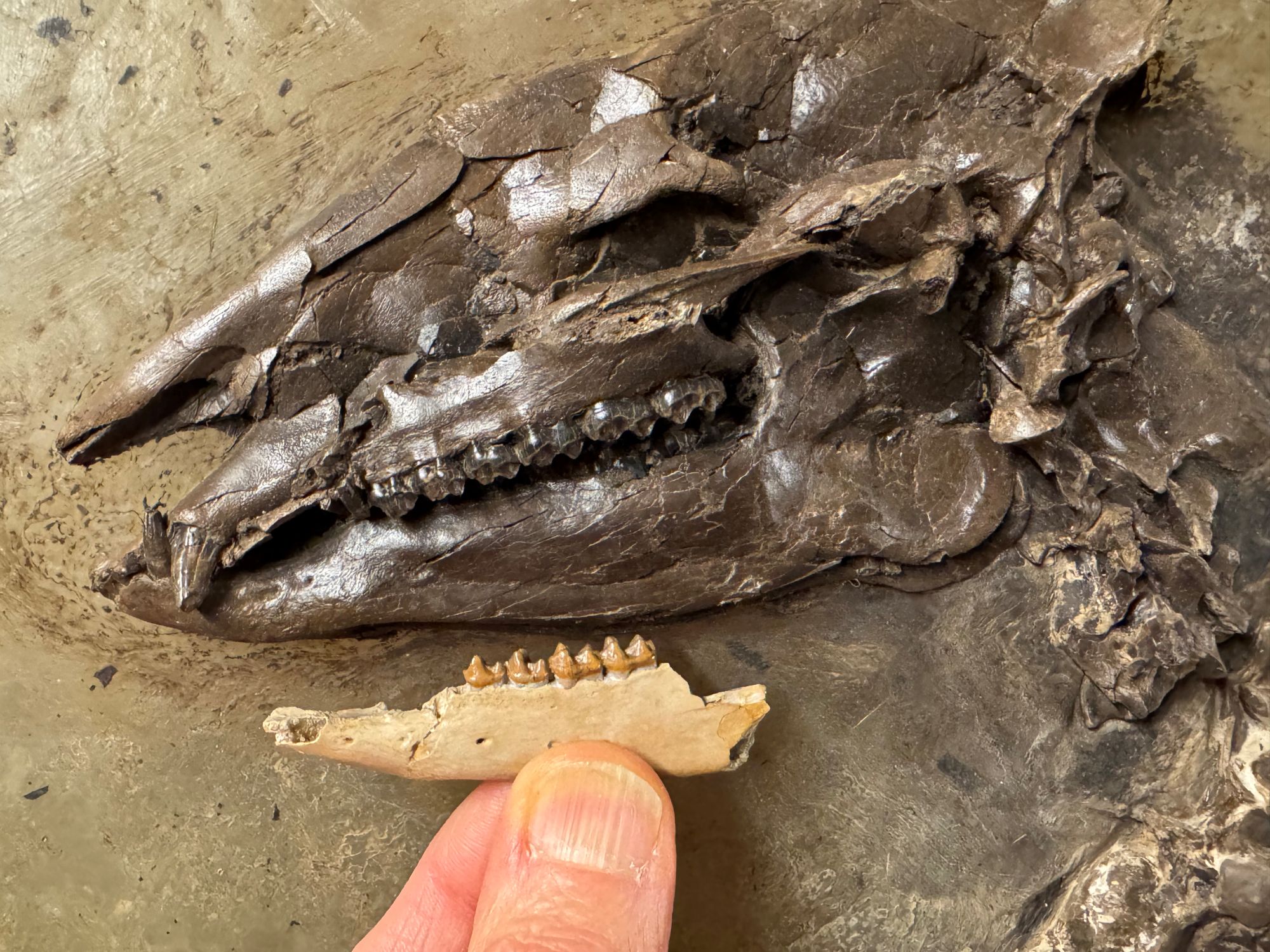
For a long time, Hyracotherium and other closely related species have been considered the ancestors of all horses. Hyracotherium - roughly the size of a small dog - appeared about 56 million years ago during a period of significant climate warming (the PETM, Paleocene-Eocene Thermal Maximum). From the small Hyracotherium to modern horses, one could then draw the perfect picture of gradual evolution.
But this new comparative study corrects this view. "Hyracotherium and several closely related species turn out not to be horses," explains palaeontologist Jérémy Tissier (Institute of Natural Sciences), "but very basal perissodactyls, from before the evolutionary split between the horse, tapir, and rhinoceros families."
The researchers estimate that the first true horses (Equoidea) only appeared about 50 million years ago, at least five million years later than previously thought. And whereas it was once believed that the equid group represented the first branching within perissodactyls, it turns out to be evolutionarily more recent and more specialized.
The Cradle
The question that has occupied palaeontologists for decades: where did perissodactyls first appear? In other words, what is the cradle of horses, rhinoceroses, and tapirs? The researchers suggest it is Asia, more precisely the India and Pakistan region. The first precursors and closest relatives of perissodactyls, including Cambaytherium, were discovered there. "From there, perissodactyls would have spread very rapidly to the rest of Asia, Europe, and North America," explains palaeontologist Thierry Smith (Institute of Natural Sciences). "During the extremely hot PETM period, land bridges must have connected the three continents of the northern hemisphere." Other mammals also used this "highway": at the beginning of the Eocene, we find on all three continents the first primates (the group to which lemurs, monkeys, and humans belong), carnivores (precursors of cats and dogs), artiodactyls (think deer and camelids), and rodents.
The research, funded by BELSPO, used a large number of fossil jaws and teeth of perissodactyls, including previously unexamined pieces from the collections of the Institute of Natural Sciences. The study is published in the scientific journal PNAS.