Neanderthals inherited the Y chromosome from modern humans.
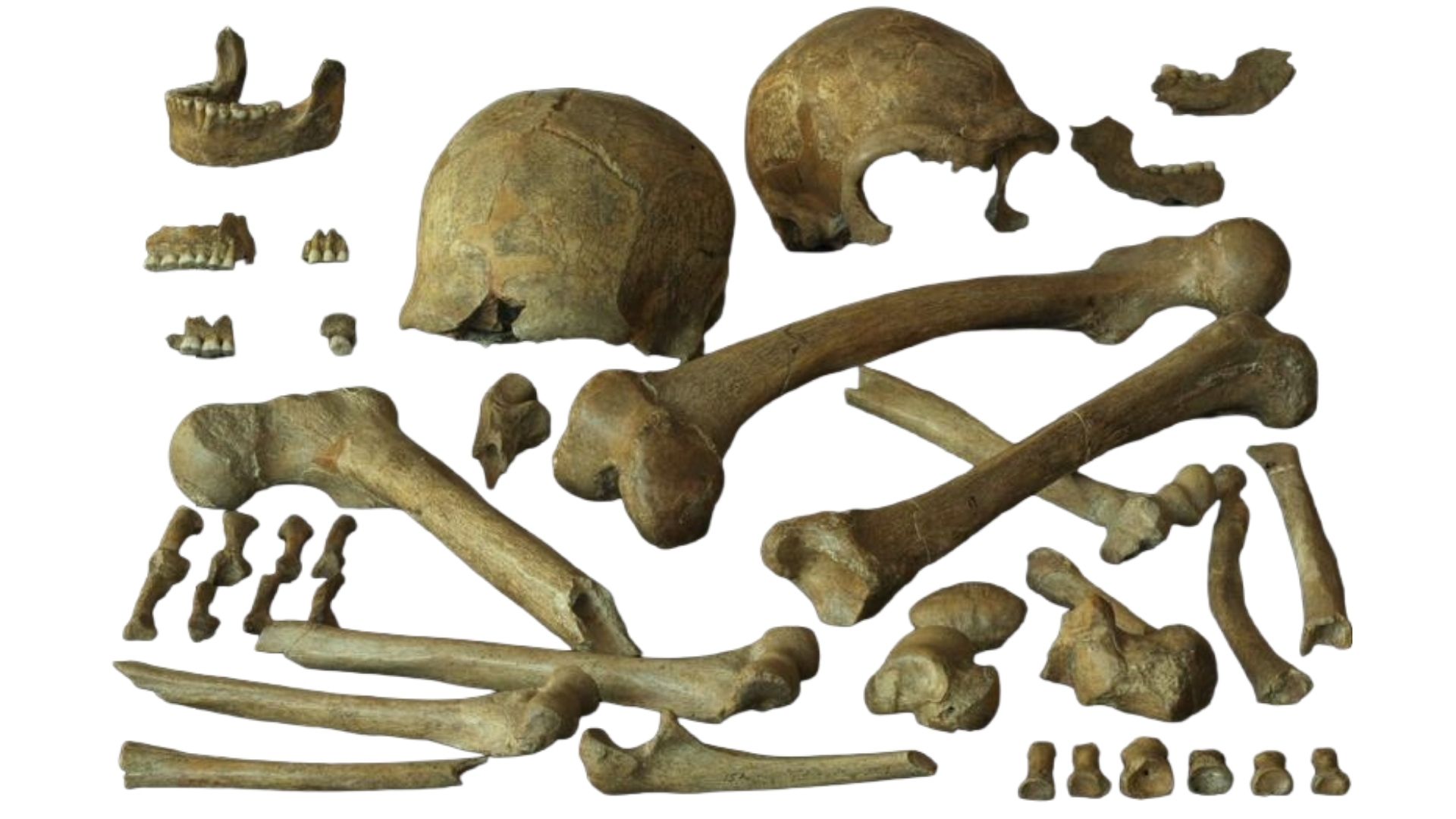
An international team of researchers has discovered that genetic exchange occurred between early modern humans and Neanderthals more than 100,000 years ago. Interbreeding between these two groups led to the complete replacement of the Neanderthal Y chromosome with that of early modern humans. The Homo sapiens Y chromosome likely offered a selective advantage and, over time, replaced all Neanderthal Y chromosomes. For this study, published in the journal Science, the DNA of a Neanderthal fossil from Spy was analyzed.
Neanderthals and anatomically modern humans coexisted for several thousand years in Europe and Central Asia, until around 40,000 years ago. While they competed for the same food and territory, this did not prevent them from interbreeding. We have all inherited some of the DNA of our robust cousin, Neanderthal Man, whether we are of Asian, European, or even African descent (as a recent study has shown).
New evidence now shows that the reverse scenario also occurred: Homo sapiens left its mark on the DNA of Neanderthals, particularly on their Y chromosome (the sex chromosome, which is passed down exclusively from father to son). This is revealed in a new study conducted by the Max Planck Institute for Evolutionary Anthropology in Leipzig, Germany, in which the Royal Belgian Institute of Natural Sciences also participated. The Y chromosome of anatomically modern humans has even completely eliminated that of their cousin, Neanderthal Man!
DNA Sampling
Before proceeding with the DNA analysis, the researchers first had to search for Neanderthal remains in good enough condition to be studied. They managed to identify five: three Neanderthals—one of whom came from Belgium—and two Denisovans, close relatives of the Neanderthals who lived in Denisova Cave in Siberia.
The “Belgian” sample comes from a tooth belonging to one of the Spy Neanderthals. In 1886, partial skeletons—of two adults and a child—were unearthed in Spy Cave near Namur. They are now housed at the Royal Belgian Institute of Natural Sciences. These are the most recent Neanderthals dated to date, approximately 40,000 years old.
The scientists developed probes, small fragments of single-stranded DNA that allow them to identify a specific DNA fragment through hybridization. They used DNA fragments from modern human Y chromosomes to find complementary fragments in the remains of Neanderthal and Denisovan Y chromosomes, onto which the probes could bind. This cutting-edge technique can work because Neanderthal and Denisovan chromosomes are quite similar to those of modern humans.
A Complete Replacement
Scientists have discovered that Neanderthal Y chromosomes are far more similar to those of modern humans than to those of Denisovans. “We were surprised by this discovery. Studies of autosomal DNA had already revealed that Neanderthals and Denisovans were closely related, and that from an evolutionary perspective, modern humans are only distant cousins. That’s why we expected their Y chromosomes to reflect this configuration,” explains Martin Petr, lead author of the study.
Their striking similarity led scientists to conclude that the Neanderthal Y chromosome was completely replaced by that of modern humans. However, the total replacement of a chromosome is highly unlikely to have occurred by chance. Scientists believe that natural selection must have played a decisive role in this replacement process. They relied on computer simulations to demonstrate that Neanderthal populations were too small to survive. It often happens that, due to inbreeding, small populations accumulate dangerous mutations in their genome, particularly on the sex chromosomes, which play a crucial role in reproduction and fertility.
Early modern humans were more numerous and therefore had greater genetic diversity. According to the "replacement hypothesis" of this study, children born to Homo sapiens fathers and Neanderthal mothers who inherited their father's Y chromosome had a selective advantage over their 100% Neanderthal cousins. From generation to generation, more and more Neanderthal men carried the Homo sapiens Y chromosome, and over time, all Neanderthal Y chromosomes were replaced by the modern human Y chromosome. The results of a previous study revealed a similar pattern for Neanderthal mitochondrial DNA (DNA passed on to children of both sexes exclusively by the mother).
Not Our Ancestors
Researchers have estimated that the last common Y-chromosome ancestor of Neanderthals and modern humans lived approximately 370,000 years ago. Encounters between the ancestors of Neanderthals and those of early modern humans had therefore already led to gene exchange long before the anatomically modern human lineage migrated out of Africa. Consequently, a human group closely related to early modern humans must have already been present in Eurasia at that time.
What is surprising is that these early modern humans are not our ancestors. Traces of Neanderthal DNA present in our genes indicate that we inherited a fraction of Neanderthal DNA between 50,000 and 70,000 years ago. The first modern humans who passed on their Y chromosome to Neanderthals were likely part of a population that had already migrated out of Africa between 100,000 and 370,000 years ago and subsequently became extinct.