Europe’s Late Neanderthals descended from a single population
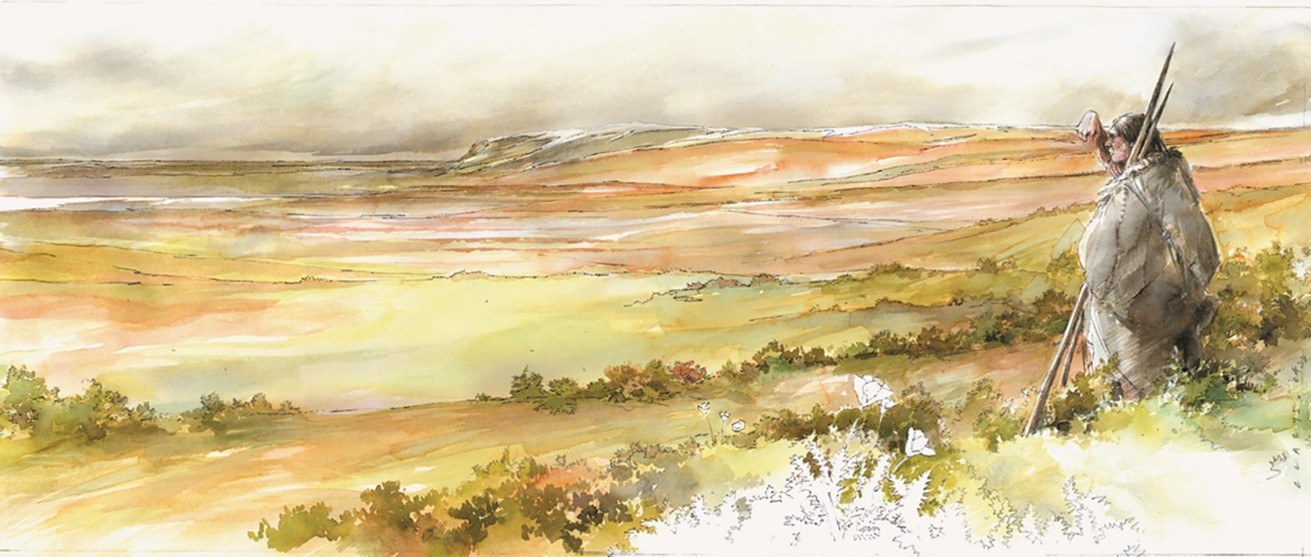
The last Neanderthals, including the individuals found in Belgian caves, descended from a single group that had survived a bitterly cold period by retreating to southwestern France. This is the finding of a new genetic study.
An international research team led by the Senckenberg Nature Research Society and the University of Tübingen has used new DNA data to demonstrate that the last Neanderthals in Europe underwent a dramatic population upheaval, leaving their gene pool with little diversity before their disappearance some 40,000 years ago.
Researchers had already indications that Europe’s widespread earlier Neanderthal populations had largely disappeared. The new study finds that one localized group had survived the harsh conditions by retreating to a climate refuge some 75,000 years ago in what is now southwestern France – and that the descendants of these survivors spread across Europe after 65,000 years ago. Genetically, almost all Late Neanderthals descended from this one lineage.
Palaeo-geneticist Cosimi Posth and his team also found that these Neanderthals later suffered a sharp decline in population around 45,000 years ago. This fall in numbers was rapid, reaching a minimum around 42,000 years ago – shortly before the Neanderthals became extinct altogether. The study has been published in the journal PNAS.
Genetically, Neanderthals can be clearly distinguished from modern humans, Homo sapiens, who replaced Neanderthals by around 40,000 years ago. “We have evidence that Neanderthals inhabited Europe continuously between 400,000 and 40,000 years ago. However, we have only fragmentary details of their population history,” says Posth. “So far, we know very little about the evolutionary developments that preceded their extinction.” He and his research team were therefore particularly interested in the Late Neanderthals, who lived between about 60,000 and 40,000 years ago.
Ten rare new individuals
In their study, the researchers focused on the mitochondria in various samples of Neanderthal teeth and bones found in caves and rockshelters. These cell organelles – tiny organs within the cell – have their own DNA, which is inherited independently of the main DNA in the cell nucleus. “Mitochondrial DNA does not contain nearly as much genetic information as the entire genome of a human being, but it usually survives longer and is easier to obtain,” says Charoula Fotiadou from Posth's research group and first author of the study.
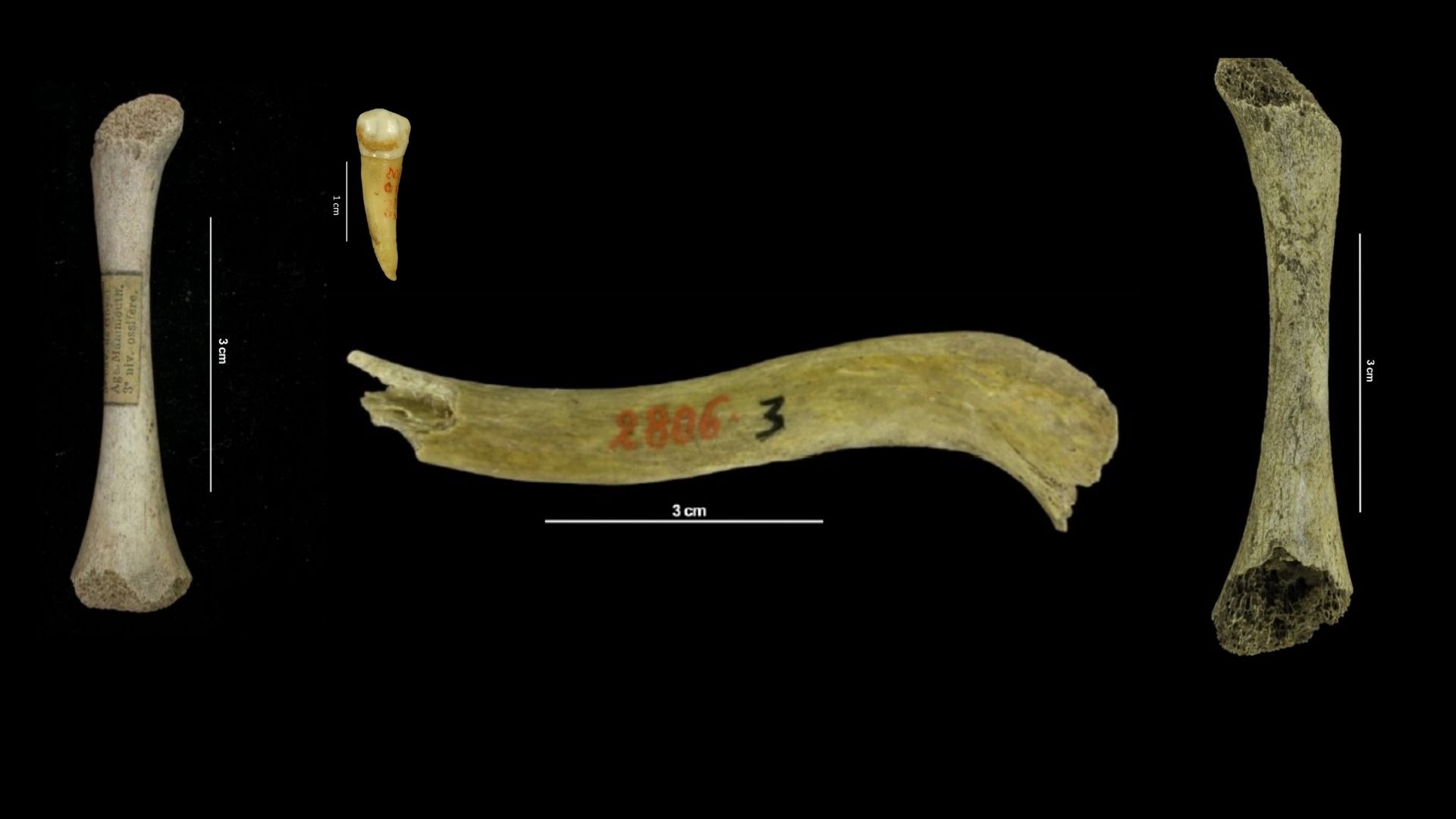
The team sequenced the mitochondrial DNA of ten new Neanderthal individuals from six archaeological sites in Belgium, France, Germany, and Serbia. These were analyzed alongside 49 other previously published samples of Neanderthal mitochondrial DNA. Belgium's contributions to the study were substantial: three newly analysed individuals from the Goyet caves, one from Trou Magrite, plus the previously sequenced Neanderthal remains from the caves of Spy, Scladina and Fonds-de-Forêt. Most of the fossils are held at the Royal Belgian Institute of Natural Sciences.
The results were combined with data on the presence of Neanderthals in Europe drawn from the large-scale archaeological database, ROAD, developed by the ROCEEH (The Role of Culture in Early Expansions of Humans). “This allowed us to combine the two lines of evidence and reconstruct the demographic history of Neanderthals in terms of space and time,” said study co-author Jesper Borre Pedersen from the ROCEEH project.
Late Neanderthals all of the same stock
The study indicates that the harsh climatic conditions of the Ice Age around 75,000 years ago severely affected European Neanderthals and depleted their genetically diverse populations. The researchers say around that time archaeological sites decline in number and become increasingly concentrated in southwestern Europe. "Our data enabled us to reconstruct geographically that Neanderthals retreated to what is now southwestern France. There, around 65,000 years ago, a new population emerged and later spread across the whole of Europe,” says Posth. “This explains why almost all Late Neanderthals sequenced so far – from the Iberian Peninsula to the Caucasus – belong to the same line of inherited mitochondrial DNA.” This demonstrates an enormous upheaval in the genetic history of European Neanderthals.
It may be that the low genetic diversity contributed to the disappearance of the Neanderthals
Cosimo Posth (University of Tübingen)
In addition, the researchers used a statistical program to calculate whether the genetic changes in mitochondrial DNA diversity over time were consistent with the assumption of a population of constant size. This was not the case: according to the calculation, the number of Neanderthals declined rapidly and sharply between 45,000 and 42,000 years ago. “Genetically speaking, the Late Neanderthals were a very homogeneous group.” says Posth. “So it may be that the low genetic diversity – and possibly also the subsequent isolation of small groups – contributed to the disappearance of the Neanderthals.”
This article is based on a press release from the University of Tübingen and the Senckenberg Nature Research Society.