New fossil sheds light on the evolution of teeth in early whales
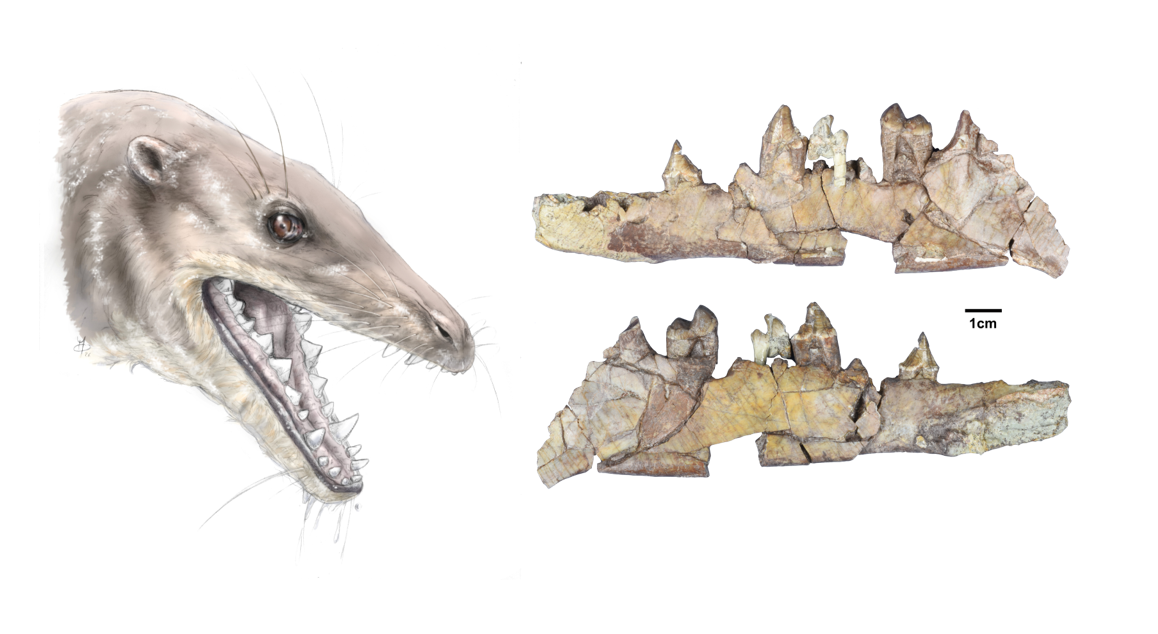
A newly discovered fossil from northern India reveals an important step in the evolution of the teeth of early cetaceans, the group of mammals that includes whales and dolphins. The fossil, named Kalakocetus aurorae, is around 48 million years old and was found in the Kalakot region of Kashmir. “This fossil suggests that the first cetaceans started shifting towards a meat-based diet very early in their evolution, probably in parallel with their adaptation to aquatic environments”, says Romain Weppe, palaeontologist in the team of Thierry Smith at the Institute of Natural Sciences and co-first author of the study.
Early whale ancestors were already known to have teeth suited to a carnivorous diet. But until now, the transition from the grinding teeth of their land-dwelling relatives to the sharper, slicing teeth of early aquatic predators remained poorly documented. “Kalakocetus aurorae gives us a glimpse of what this intermediate stage may have looked like,” says Weppe. Its lower molars show a unique shape, combining features seen in the terrestrial relatives of whales with those of the earliest known cetaceans. The discovery suggests that the evolution of whale teeth was more gradual than previously thought.
Between land and water
The fossil was discovered in Middle Eocene sedimentary rocks, dating to around 48 million years ago. The Kalakot region, in northern India, has long been considered a key area for understanding the origin of cetaceans, as it has yielded some of the oldest fossils documenting the transition from land mammals to ancestors of present-day whales and dolphins.
The most remarkable feature of Kalakocetus aurorae is its lower molars. In close terrestrial relatives of cetaceans, molars typically have four main cusps, or pointed parts, adapted for crushing and grinding food. In the earliest cetaceans known so far, these molars were already simplified and dominated by two sharp cusps adapted for slicing. Kalakocetus aurorae shows an original intermediate condition, with three cusps. “This makes Kalakocetus aurorae the most primitive cetacean identified to date,” says Weppe.
Reconstructing an ancient diet
To understand where Kalakocetus aurorae fits in cetacean evolution, researchers compared its dental anatomy with that of fossil hoofed mammals and early cetaceans. Their phylogenetic analysis places the new species at the very base of the cetacean evolutionary tree. The team also studied the fossil teeth using 3D topographic analyses and microscopic wear patterns. These techniques help reconstruct how the jaws of extinct animals functioned and what they may have eaten.
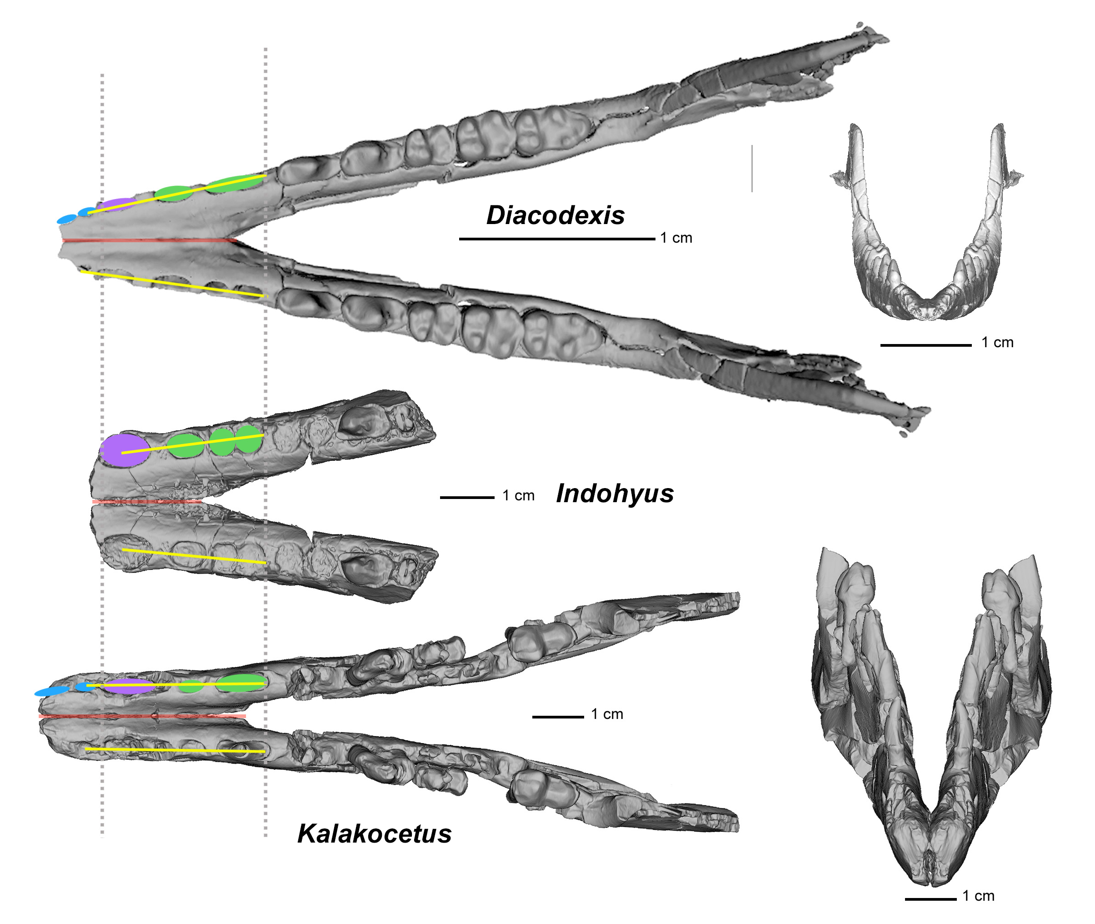
The results show that Kalakocetus aurorae had already adopted a carnivorous diet. Its teeth were mainly used for shearing, while the grinding function of the molars had already been strongly reduced. “Our results indicate that Kalakocetus aurorae had already adopted a carnivorous diet involving mainly shearing movements of the jaw,” says Weppe.
A missing stage in whale evolution
The transition of cetaceans from land to water was one of the most dramatic transformations in mammal evolution. It involved major changes in their anatomy, including their teeth. Modern cetaceans have highly specialised feeding systems. Dolphins and other toothed whales have mostly simple, cone-shaped teeth, while baleen whales have lost their teeth entirely and filter food using baleen plates.
Early fossil cetaceans already showed a strong simplification of the molars, with grinding surfaces replaced by sharper teeth adapted to carnivory. Until now, however, this transition appeared rather abrupt in the fossil record, with no clearly documented intermediate stage. The dental morphology of Kalakocetus aurorae provides precisely this missing element. It shows that the evolution of cetacean teeth probably happened more gradually than previously thought.
Further research
The discovery opens new perspectives for understanding the earliest stages of cetacean evolution and the mechanisms that accompanied their transition to life in water. Future fossil discoveries, combined with functional anatomy, 3D imaging and isotopic analyses, could help researchers better understand how the earliest cetaceans captured and consumed their prey.
The study was published in the journal Nature Ecology & Evolution.