Pet and ornamental horticulture sectors take action against invasive species
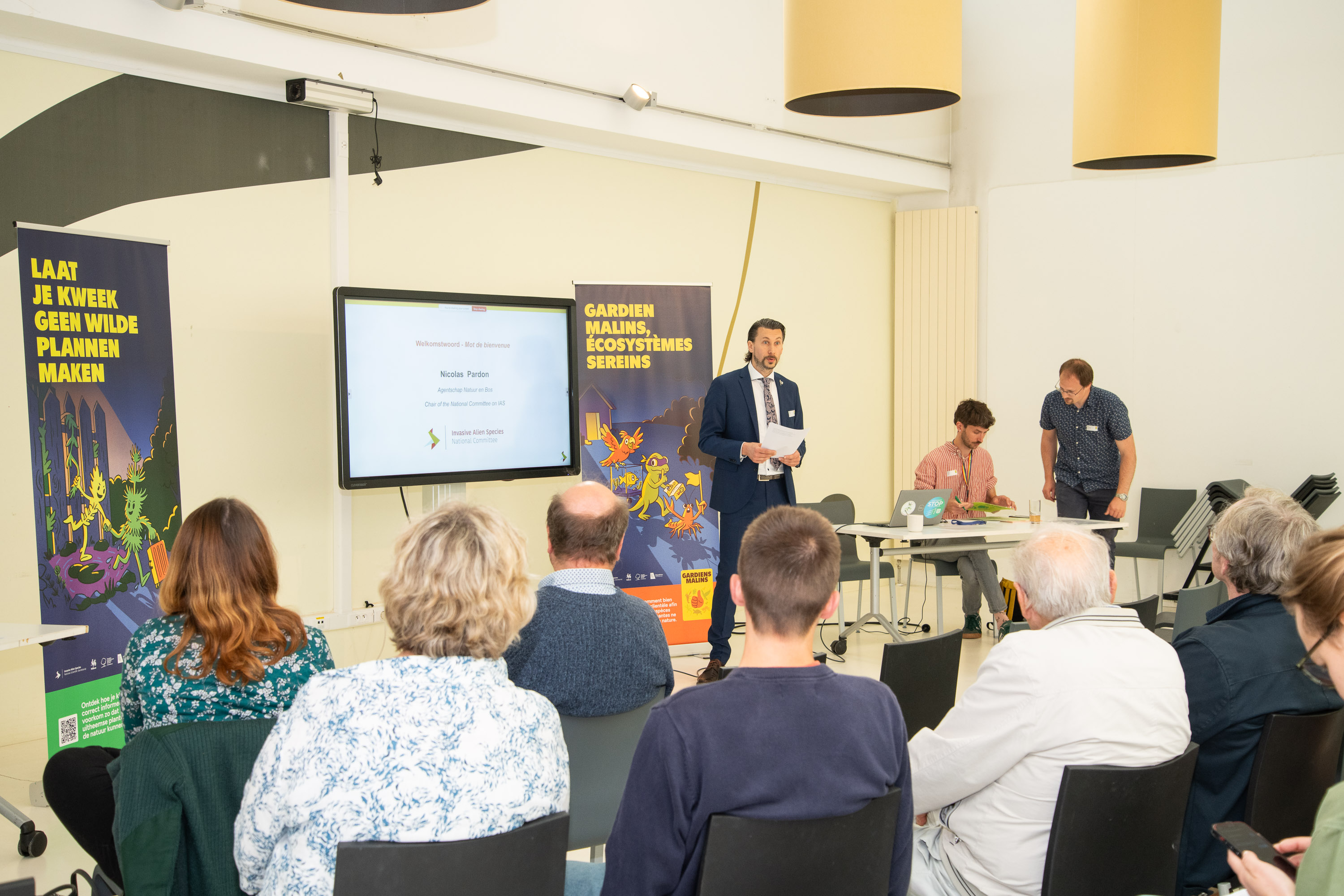
The pet and ornamental horticulture sectors signed new codes of conduct in Brussels this week to help limit the spread of invasive alien species in Belgium. At the same time, a national awareness campaign was launched with one clear message: make smart choices. “Prevention is key: what does not end up in nature today will not have to be controlled tomorrow,” says Johan De Gruyter of the National Scientific Secretariat on Invasive Alien Species (NSSIAS).
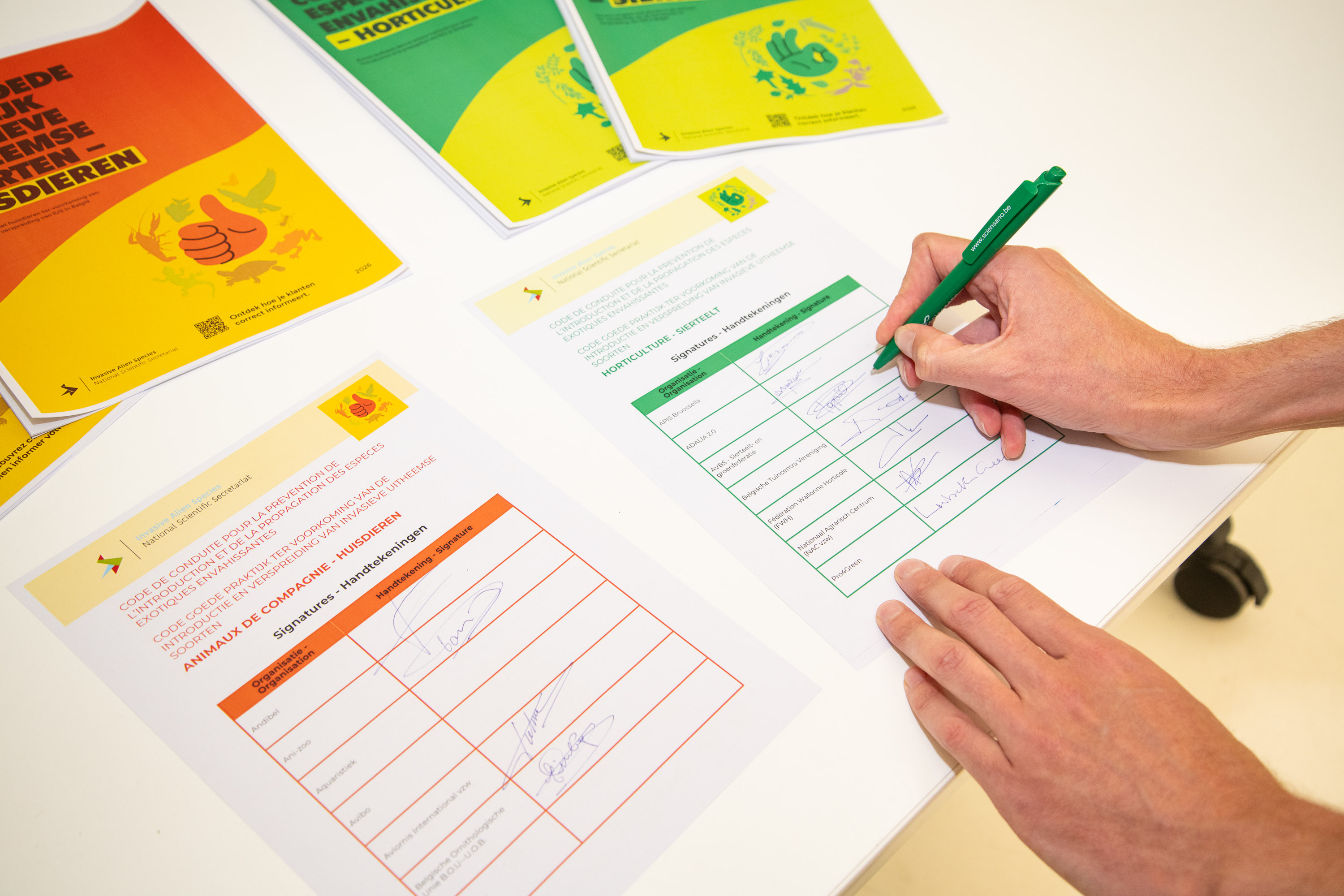
The signing is the result of a joint approach by the competent authorities in Belgium — the Agency for Nature and Forests, Brussels Environment and SPW ARNE (SPW Agriculture, Natural Resources and Environment) — together with sector organisations and scientists. The collaboration was coordinated by the National Scientific Secretariat on Invasive Alien Species, hosted by the Institute of Natural Sciences. The codes are voluntary, but they represent a concrete commitment by the sectors to actively reduce risks and better inform customers.
A growing problem with wide-ranging impacts
Invasive alien species are an increasing challenge for nature and society. In Europe, an estimated 12,000 alien species are present, some of which behave invasively and spread rapidly through natural ecosystems. Their impact is considerable: almost one fifth of threatened species in Europe are affected by them. They also cause economic damage, for example through reduced agricultural yields, damage to infrastructure and high costs for management and control. In addition, they can pose risks to public health.
An important role for pets and ornamental horticulture
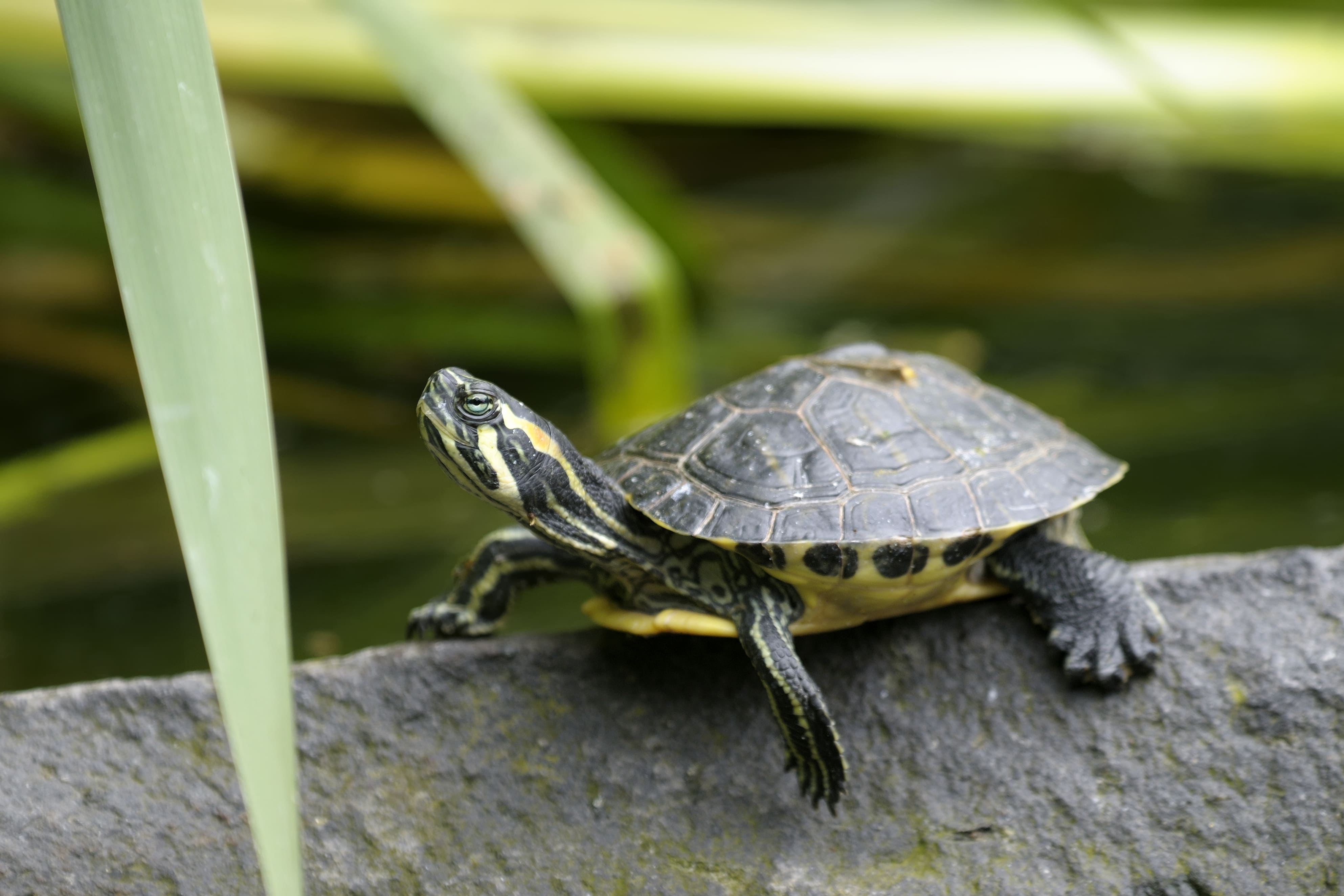
Many invasive species originate from the pet sector and ornamental horticulture. Animals that escape or are deliberately released, and plants that spread from gardens, are important introduction pathways. Species can also be unintentionally transported through plant material, substrate or transport. What often starts as an innocent purchase can therefore develop into a problem in nature. “Many introductions happen unintentionally. With targeted information and simple adjustments, many problems can be avoided,” says De Gruyter.
Concrete agreements for the sectors
The new codes of conduct strongly focus on prevention. In the ornamental horticulture sector, this means, among other things, that a number of invasive plant species will no longer be sold or planted in public areas, and that clear labelling and recommendations will be provided for risk species. In the pet sector, the focus is on correct species identification, sound advice for customers and preventing escapes or the release of animals into nature. Both codes also include biosecurity measures, such as careful waste management and preventing unintentional spread.
“Every link in the chain, from breeder or grower to consumer, has a role to play in preventing spread,” says De Gruyter. Both codes also emphasise the importance of monitoring and data sharing. “Observations of newly introduced species are crucial for a rapid response, while reliable data on the distribution of established or expanding species are essential for effective management.”
Campaign encourages action
Alongside the codes, a new communication campaign was launched targeting both professionals and consumers. With slogans such as “Grow smart — Don’t let your plants go wild” and “Smart owners — Spread knowledge, not animals”, the campaign focuses on awareness and behavioural change. According to the initiators, this is where real change can happen. “Smart choices by consumers and professionals make the difference between an innocent purchase and an ecological problem,” says De Gruyter.
Preventie als sleutel
De aanpak past binnen een bredere Europese strategie voor de bestrijding van invasieve uitheemse soorten en bouwt voort op eerdere initiatieven in andere sectoren. Door nu in te zetten op preventie willen de betrokken sectoren én overheden samen grotere en duurdere problemen in de toekomst vermijden. Daarom hebben de verschillende Belgische overheden besloten om gezamenlijk in te zetten op de uitwerking en uitvoering van een nationaal actieplan voor de preventie van de introductie en verspreiding van invasieve uitheemse soorten.
“Doordachte keuzes vandaag zijn essentieel om de biodiversiteit van morgen te beschermen,” besluit De Gruyter. Het evenement in Brussel werd afgesloten met de officiële ondertekening en een netwerkmoment.
Meer informatie: www.iasregulation.be